
Why I Rely on Solscan: A Practical Guide to Solana’s Token Tracker and Explorer
Whoa! I keep finding myself opening a blockchain explorer first whenever somethin’ weird pops up in my wallet. Seriously? Yes. The first split-second reaction is always the same: check the transaction. Then dig deeper. My instinct said do that years ago, and honestly it’s saved me time and a few headaches.
Blockchains are messy sometimes. Short story: one evening a token transfer looked completed in my wallet app, but the program logs told a different tale. I opened an explorer and followed the trace back to a program instruction that had reverted—then found the real reason (a mismatched account seed). That kind of forensic view is why explorers matter. They turn black-box blips into readable events, and for Solana, Solscan is that readable window for many of us.
Here’s the thing. An explorer isn’t just a pretty dashboard. It’s a forensic tool, a sanity check, and yes, a little bit of therapy when your tokens vanish or behave oddly. You get raw transaction logs, decoded instructions, token mint histories, token holder lists, and sometimes, if you’re lucky, a human-friendly name attached to an address. But of course it’s not flawless—off-chain metadata can be stale or misleading, and some token labels are user-provided (so caveat emptor).
How Solscan Helps You Track Tokens and Transactions
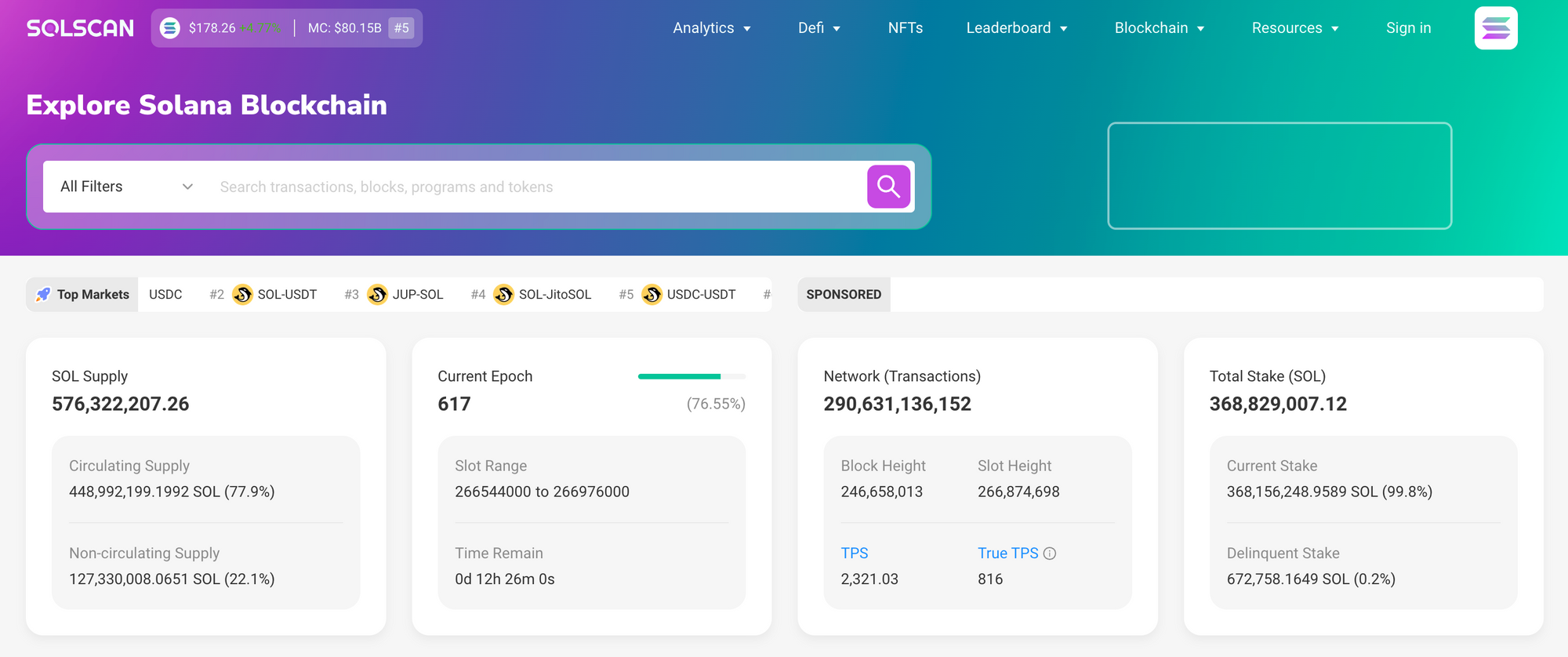
Okay, so check this out—when you paste an address or a tx signature into the search bar on the solscan explorer official site, you get a layered view. Quick facts at the top. Then a cascade of parsed instructions, native SOL transfers, SPL token movements, and decoded program calls. It’s like peeling the onion on a move; each layer tells you who touched what and when.
Short version: it shows token flows. Medium version: it decodes program instructions for many commonly used contracts. Longer thought—because this matters for audits and troubleshooting—Solscan also surfaces inner instructions and program logs, which help you understand why a program failed or why a transfer got rerouted. That’s critical when fixing a failing swap or validating a bridge operation.
One useful feature I use often is the token holder list. It’s not perfect, but it helps flag suspicious distributions—like when a new token has two wallets holding 90% of supply. That red flag alone has stopped me from buying into a rug more than once. On the flip side, you can verify token mints, see metadata accounts, and check whether a mint authority still exists. Those are the small checks that avoid big mistakes.
Pro tip: if you see a transaction with a “failed” status, don’t stop at the status. Expand the logs. Read the error codes. Many failures are “insufficient funds for fees” or “incorrect account passed.” Sometimes the wallet UI masks these details, but the explorer shows the raw error. Very very helpful.
Practical Walkthroughs I Use—Fast Guides
Trace a transfer. Paste the tx signature. Follow the outputs. If multiple token transfers occurred, check which program invoked the moves (Serum? Raydium? Wormhole?).
Verify a token mint. Open the mint account. Look at supply and decimals. Inspect listed metadata accounts. If the metadata URI points to IPFS or Arweave, click the link and see the JSON. If that JSON is missing images or looks auto-generated, be skeptical.
Audit a smart contract interaction. View the instruction data and program logs. If a contract logs “Error: AccountNotRentExempt” or similar, that tells you the transaction wasn’t prepared correctly. These little clues speed up debugging during dev sprints or when a user files a support ticket.
I’ll be honest—this part bugs me: explorers can only show what’s on-chain. They cannot prove who runs a front-end, or whether a token’s project page is legit. You have to pair on-chain checks with off-chain diligence. (Oh, and by the way… check project socials when in doubt.)
Why Speed and UX Matter on Solana
Solana is fast—so your explorer needs to keep up. Delays in block indexing or stale caches make a big difference when you’re tracking a mempool fight or verifying a fast airdrop. Solscan’s cadence in updating block data has improved a lot over time, though every explorer has occasional lags during congestion. My instinct still says refresh; then refresh again if the slot is high-traffic.
On the UX side, good filtering and search are underrated. Being able to isolate SPL transfers, or to filter by program invocation, moves you from “what happened?” to “what exactly executed this behavior?” in minutes instead of hours. That speed matters if you’re triaging customer reports or doing forensic work after an exploit.
On one hand, explorers are powerful. On the other hand, they can lull users into over-confidence if they treat labels as endorsements. So actually, wait—use the explorer as one tool among many. Cross-check patterns, check contract source if available, and if a wallet shows an unfamiliar approval, revoke it.
Common Pitfalls and How to Avoid Them
People assume token names equal legitimacy. Not true. Token labels are sometimes user-contributed. Always check mint authority and supply metrics.
Another misstep: trusting transaction confirmations alone. A confirmed tx might still be a failed instruction. Read the logs. Seriously—read them.
Also: don’t assume an empty metadata URI equals a scam. Sometimes projects haven’t uploaded assets yet. Context matters. Look at commit history, socials, and dev activity.
FAQ
How do I verify a token’s authenticity?
Look at the mint account on the explorer: check supply, decimals, and mint authority. Inspect linked metadata for publisher info (and whether it’s stored on IPFS/Arweave). If most of the supply is held by a few wallets, or the metadata is copied from other projects, treat it with caution. Pair on-chain checks with off-chain research—tweets, GitHub, Discord—because the explorer can only show ledger facts, not reputational context.
Can an explorer help recover a failed transaction?
Not recover—no. But it can tell you why it failed. Transaction logs and program error messages reveal the cause (fee issues, missing accounts, wrong signer). That helps when you retry the operation or report a support ticket, and in many cases it prevents repeated failures.
Is Solscan the only explorer I should use?
Nope. Use multiple explorers if you want redundancy and cross-verification. Different explorers sometimes surface different metadata or UI features. But for a lot of everyday token tracking and transaction analysis on Solana, Solscan is a solid starting point.
Leave a Reply
Want to join the discussion?Feel free to contribute!